MMR Deficiency


Components of DNA MMR are genetically lost or mutated in up to 20% of certain patient tumours, notably colorectal, endometrial, rectal, and gastric cancers. MMR-deficient cancers are commonly characterised by the accumulation of DNA mutations during replication. These accumulated mutations comprise both single nucleotide variants (SNVs) and indels/microsatellites. Accumulation of DNA SNVs and Indels over time engenders an immune responsive state. ​(Figure 2).

Accumulation of gained SNVs and indels is quantified by Tumour Mutational Burden (TMB) whilst the origin of the gained mutations is determined by the fingerprint signature of the gained mutational patterns which are characteristic of MMR-deficiency (Nature click here and Nucleic Acids click here ).
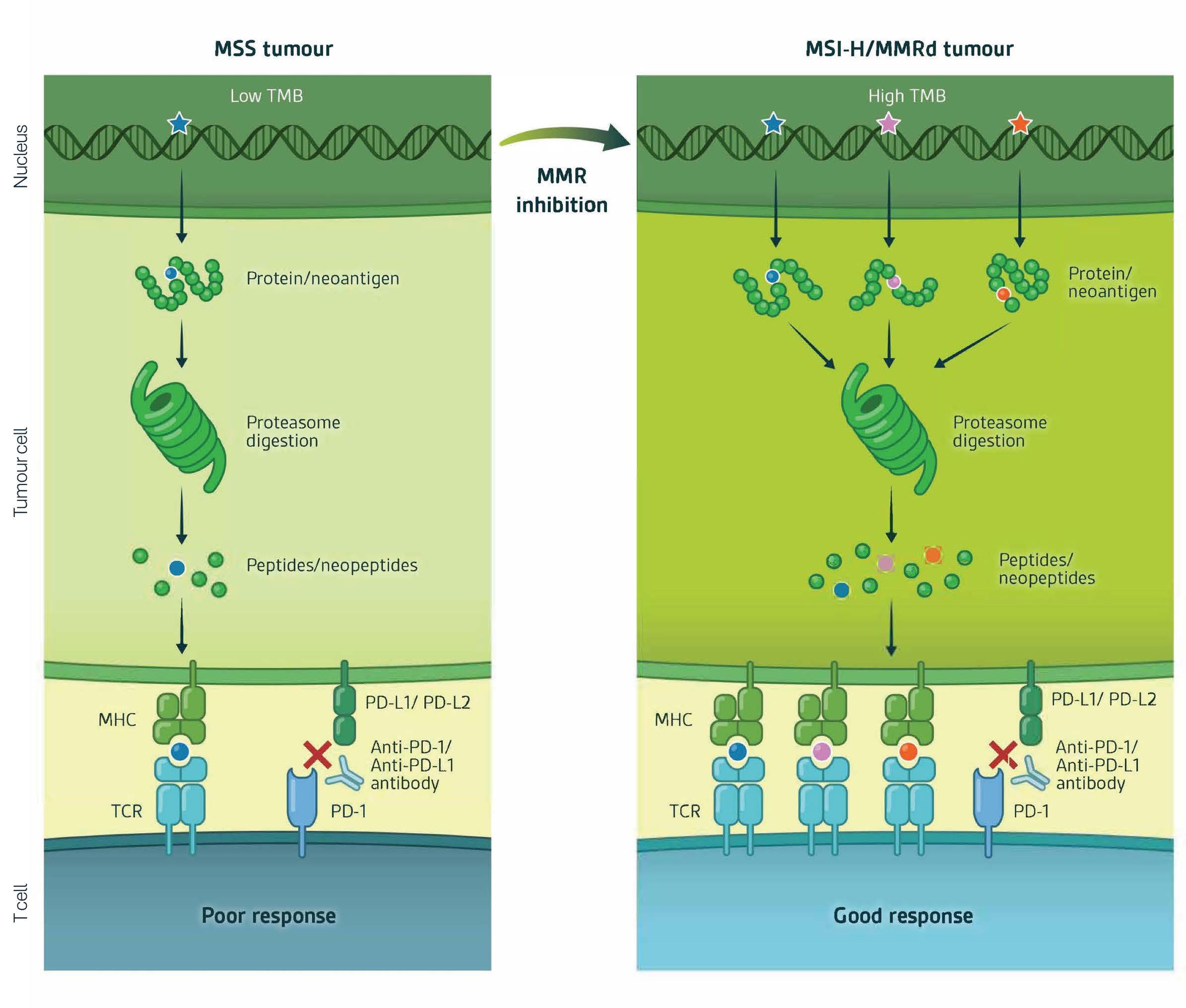
 

Figure 2

 
Figure 2

​MSI-H status and high Tumour Mutational Burden (TMB) drive the expression of “foreign” protein amino acid sequences that are substrates for antigen processing and presentation as neoantigens, stimulating immune activation. Tumours with a greater number of neoantigens are more immunogenic and prone to immune surveillance that, in turn, correlates with higher survival rates in MMR-d cancer patients.​ ​

Cancers that harbour two or more of five routinely tested microsatellite markers are described as high frequency MSI (MSI-H), and MSI analysis is a clinically used diagnostic biomarker for MMR-d tumours. ​

​Patients with MMR-d, MSI-H tumours have an increased likelihood of responding to immunotherapy, such as immune checkpoint blockade, supporting a rationale for immunotherapy-based treatment strategies.

Figure 2
 

Hereditary Loss of MMR​

Patients with Lynch syndrome carry a heterozygous (monoallelic) germline loss-of-function in one of the MMR genes (MLH1, MSH2, MSH6, PMS2). Despite loss of function of one gene copy, Lynch patients develop normally for many decades. Somatic loss of the second allele is commonly tumour-specific with resultant loss of MMR function, emergence of an MMR-d genotype (TMB, MMR-d mutational fingerprints), and microsatellite instability detectable in tumour tissue. ​

​Patients with Constitutional Mismatch Repair Deficiency (CMMRD) are characterised by biallelic germline loss of MMR components in all tissues from embryo. Germline loss of PMS2 is most common (65% of patients). CMMRD patients generally develop normally to adulthood but have increased childhood tumour risk beginning about age 9 on average; their tumours are commonly highly responsive to immunotherapy. ​


Clinical treatment of MMR-deficient tumours ​

Immune checkpoint inhibitors offer a significant therapeutic advance in the treatment of MSI/MMR-d cancers. The approval of immune checkpoint inhibitors for patients with MMR-d malignancies, regardless of tissue type, has improved clinical outcomes for thousands of patients​. ​

Recently, neoadjuvant CPI treatment of non-metastatic MMR-d rectal and colorectal cancers has demonstrated remarkable efficacy (complete responses) in most patients without need for often life-changing chemoradiation or surgery​​.